At The Printery, every project is handled with care and precision. Our team of seasoned professionals brings decades of experience to the table, ensuring that each print job meets the highest standards of quality.
Vinyl printing supports how brands show up across physical spaces, from first impressions to long-term visibility.
So, choosing the right approach to vinyl printing becomes essential when you want results that hold up at scale.
What Is Vinyl Printing
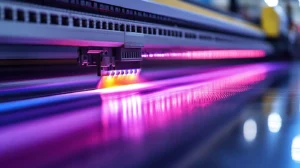
Vinyl printing is a method of printing designs, text, or images onto flexible vinyl material. You print directly onto vinyl using specialized printers and inks, then apply the finished vinyl to surfaces such as walls, windows, floors, vehicles, panels, or signs.
Because vinyl is flexible and durable, it performs well in environments where paper or standard prints wear out. After printing, installers mount, wrap, or adhere vinyl using pressure-sensitive backing, allowing it to conform to flat or slightly curved surfaces.
Durable Vinyl Printing for Demanding Spaces
Vinyl printing is designed for durability in environments where signs and graphics need to hold up under regular use and exposure. You use it when prints must stay readable, intact, and consistent over time, not just look good on day one.
In demanding environments, durability matters because vinyl may be exposed to:
- Sunlight and UV exposure – Printed vinyl uses inks and materials made to reduce fading when exposed to light, especially in outdoor or well-lit indoor spaces.
- Temperature changes – Vinyl can expand and contract with heat and cold. Durable vinyl is selected to stay stable and maintain adhesion across normal temperature ranges.
- Moisture and humidity – Many vinyl materials resist moisture, making them suitable for areas like entrances, windows, restrooms, or semi-outdoor locations.
- Frequent contact and cleaning – In high-traffic areas, vinyl graphics may be touched, wiped, or cleaned. Durable finishes help protect the printed surface from wear.
- Long-term installation – When vinyl is produced correctly and installed on a suitable surface, it can remain in place for years without cracking, peeling, or lifting.
If your space requires graphics that stay clear and consistent despite daily use, durable vinyl printing gives you a practical, long-lasting solution.
Vinyl Application Types Across Signage and Displays
Here are the main vinyl application types you’ll see across signage and displays, and when you’d use each one.
1. Adhesive (Self-Stick) Vinyl Decals
- You print on vinyl that has an adhesive backing, then apply it to a surface.
- You use this for logos, hours, labels, directional signs, product decals, and small signs.
- Common choices include removable (easier to take off) or permanent (stronger hold).
2. Wall Graphics and Wall Murals
- This is vinyl made to sit smoothly on painted walls and reduce bubbling or damage during removal (when the right material is chosen).
- You use this for: office branding, campus messaging, wayfinding, feature walls, and temporary campaigns.
- Matte finishes are common because they reduce glare under indoor lighting.
3. Window Graphics
- You apply vinyl to glass for branding, privacy, promotions, or information.
- You use this for storefronts, interior glass walls, clinics, lobbies, and schools.
- Variations include clear vinyl (design printed on clear film), frosted/etched-look vinyl (privacy + a clean “glass etch” style), and perforated window vinyl (often used on street-facing windows; visibility depends on lighting and placement)
4. Floor Graphics
- This is vinyl designed for foot traffic and usually paired with a non-slip rated laminate when required.
- You use this for: directional arrows, queue lines, safety notices, seasonal promotions, and event navigation.
- Floor surfaces like tile, sealed concrete, and smooth floors behave differently from textured floors.
5. Rigid Sign Face Graphics (Vinyl Mounted to Boards/Panels)
- You print vinyl and apply it to rigid materials like foam board, PVC board, acrylic, aluminum composite, or coroplast.
- You use this for real estate signs, lobby signs, menu boards, trade show panels, and facility signage.
- This is common when you need a sign that stays flat and looks structured.
6. Banner Vinyl
- Banners are typically printed on flexible PVC banner material (often called “vinyl banners”).
- You use this for events, building signage, temporary promotions, and construction messaging.
- Finishing options (like hems and grommets) matter for strength and how you hang it.
7. Backlit and Translucent Display Films
- These materials are made to work with light behind them.
- You use this for lightbox signs, menu lightboxes, and illuminated retail displays.
- The goal is even color and readability when the sign is lit.
8. Reflective Vinyl
- This vinyl is designed to reflect light (helpful in low-light conditions).
- You use this for safety signs, parking areas, vehicle markings, and facility warnings.
- It’s often selected for visibility rather than decorative color range.
9. Vehicle Graphics and Wrap Vinyl
- Wrap vinyl is made to conform to curves and contours better than standard decal vinyl.
- You use this for fleet branding, service vehicles, trailers, and mobile advertising.
- Install quality matters a lot here because vehicles have curves, seams, and exposure to weather.
10. Magnetic and Static-Cling Graphics
- These options are for signage you want to remove and reuse.
- You use this for temporary promotions, seasonal messaging, and quick-change displays.
- Note: Magnets only work on steel surfaces, and static cling works best on very clean, smooth glass.
When you choose the right material for the environment, your signage lasts longer and stays more consistent with less upkeep.
Commercial Use Cases for Scalable Brand Deployment
When used in commercial or institutional settings, vinyl printing is what you use when your brand has to look the same across many locations, such as stores, offices, campuses, clinics, branches, job sites, and fleets.
Here are common use cases where vinyl supports scalable brand deployment:
1. Multi-location storefront standards (windows + entry areas)
You use window vinyl for consistent storefront branding and clear customer information, including hours, entry or exit guidance, and promotions. Its easy installation on glass and seasonal flexibility make it ideal for retail rollouts and multi-location chains.
2. Wayfinding and directional signage
You use vinyl to guide people through spaces – arrows, room IDs, directional labels, and zone markers – especially in larger commercial buildings. It scales well because you can standardize layouts and reproduce the same set for every site.
3. Safety and compliance messaging
You use durable vinyl for safety notices in workplaces and facilities, such as hazards, restricted areas, PPE reminders, and parking or loading instructions. Reflective vinyl improves visibility in low-light areas like parking lots and service zones.
4. In-store and on-site promotions (fast updates, clean removal)
You use removable wall, window, and floor graphics to run promotions without repainting or rebuilding displays. This is common for seasonal campaigns and short-term launches where you want the same creative across many locations.
5. Branded interiors (lobbies, offices, showrooms)
You use wall graphics and environmental branding to make spaces feel intentional, including logo walls, mission statements, department IDs, and feature murals. Commercial teams like this because you can refresh a space quickly without construction.
6. Floor graphics for queueing and navigation
You use floor vinyl for lines, arrows, pickup zones, and event navigation, especially in high-traffic areas. These installs usually require the right materials and (when needed) protective, slip-focused finishing to handle foot traffic.
7. Fleet branding (vehicles as rolling locations)
You use vehicle wraps/graphics to keep trucks, vans, and service vehicles consistent across a fleet. Wrap films are designed for complex curves and long-term use, which is why fleets rely on them for scalable deployment.
8. Construction, property, and event signage
You use banner vinyl and panel-mounted graphics for job sites, leasing, directional signage, and events, where you need clear visibility and fast turnaround. Finishing (like hems and grommets) matters because it affects how the banner holds up when installed.
9. Standardized “kits” for rollouts
When you’re deploying across multiple sites, you often bundle vinyl into repeatable kits (window set + door hours + interior logo + wayfinding set). This approach reduces mistakes because each location installs the same parts in the same places.
When you manage multiple locations, consistency depends on how vinyl is produced and prepared, not just how it looks. Reliable results come from controlled materials, accurate color, and production systems built to support scale.
How The Printery Delivers Reliable Vinyl Printing Solutions
The Printery delivers reliable vinyl printing by focusing on consistency, quality control, and scale so your materials look right no matter where they’re installed.
You produce vinyl using controlled color standards and precise finishing, keeping logos consistent while minimizing errors, rework, and delays. Clear timelines, quality checks, and delivery planning guide each project to support smooth, coordinated rollouts.