Signage is often the first and last thing a customer sees at your business. A clear, well-made sign tells people who you are and where to go before anyone says a word. On the other hand, a faded or hard-to-read sign sends the opposite message.
In this guide, you’ll learn the main types of business signage and how to match sign materials to each setting. You’ll also learn how to plan a project so every sign looks like it belongs together.
What Signage Does for a Business
Before you pick sizes or materials, it helps to know what you want your signs to do. Most business signage has two main jobs. First, it builds recognition for your brand. Second, it helps people find their way once they arrive.
First Impressions and Brand Recognition
Your outdoor sign works like a handshake. People form opinions about your business from it, often before they step inside. For instance, a crisp sign in your exact brand colors shows that you care about details. In contrast, a faded or peeling sign can make even a great business look neglected.
Repetition is important, too. When your logo, colors, and fonts look the same everywhere, customers start to remember you. As a result, every sign adds to the same brand story.
To see how large prints can carry your brand through a space, read about how wide format printing brings your brand to life.
Wayfinding and Customer Experience
Wayfinding signage helps people get where they need to go without asking for help. This includes directional arrows, room numbers, floor directories, and restroom signs. In offices, campuses, and healthcare facilities, good wayfinding lowers stress for visitors and saves your staff time.
Clear signs also shape how people feel about their visit. When customers can find the right suite on their own, they feel more at ease. In other words, wayfinding is a quiet form of customer service.
Opening a new location or refreshing an old one? Talk to The Printery about planning a full sign package for a new or refreshed location, and we’ll help you map out the signs you need.
Common Types of Business Signage
Now that you know what signage can do, the next step is choosing the right signs for your space. Most businesses use a mix of the types below.
Indoor Signage
Indoor signs are protected from sun and rain, so you have more freedom with materials and finishes. Common examples include:
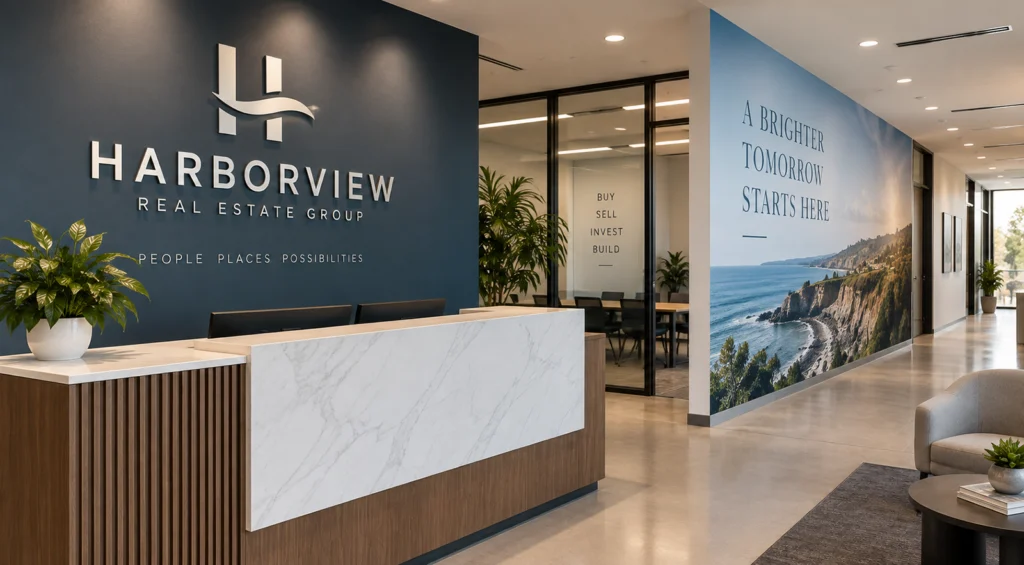
- Lobby signs – Your logo behind reception, often on acrylic or PVC and mounted with standoffs for a raised look.
- Wayfinding signs – Directional signs, suite numbers and directories that guide people through a building.
- Wall graphics – Large printed vinyl that covers a wall with images, patterns or brand messages.
- Posters – Short-term promotions, menus or announcements, often framed or printed on foam board.
Outdoor Signage
Outdoor signs face sun, wind, rain, and temperature changes every day. Because of that, material choice matters much more outside. Common outdoor signs include:
- Building and storefront signs – Long-term signs with your name and logo, often printed on aluminum composite.
- Yard signs – Lightweight signs on wire stakes for real estate, events, and promotions, usually made from corrugated plastic.
- Banners – Flexible vinyl signs with hemmed edges and grommets for hanging on fences, buildings, or poles.
Keep in mind that many cities require a permit for permanent exterior signs. So before you order a building sign, check the rules with your city or property manager.
Window and Storefront Graphics
Your windows are prime sign space, since people passing by see them first. Most wall and window graphics are made from vinyl, and windows give you several options:
- Cut vinyl lettering – for store hours, logos and contact details.
- Perforated window film – which shows a full image from outside while still letting people inside see out.
- Frosted or privacy film – for offices, conference rooms and medical spaces.
- Static clings – which hold to glass without adhesive and are easy to move for seasonal promotions.
Event and Temporary Signage
Not every sign needs to last for years. For grand openings, conferences and seasonal sales, temporary signage gives you strong visibility at a lower cost. Popular choices include retractable banner stands, foam board posters, A-frame signs and floor decals.
For a stronger impression, pair your event signs with branded promotional products so visitors take your brand home. To see every option in one place, explore The Printery’s signs, graphics and displays services.

Choosing Signage Materials
Once you know which signs you need, the material decides how long each one lasts and how it looks. Printers call this material the substrate. Sign materials fall into two groups: rigid and flexible. For a deeper look, see our guide to understanding substrate options.
Rigid Materials
Rigid materials hold their shape, so you can mount them on walls, posts, or stakes.
- Corrugated plastic – Light, waterproof, and affordable. It’s the go-to choice for yard signs and short-term outdoor use. Learn more in our post on corrugated plastic sheets.
- PVC (often sold as Sintra) – A smooth, rigid board for indoor lobby signs, wayfinding, and displays. However, it can warp in strong heat, so it’s not ideal for long-term signs in direct sun.
- Foam board – Very light and low in cost. It’s great for indoor posters and short events, but it dents easily and doesn’t handle moisture well.
- Aluminum composite (ACM) – Two thin aluminum sheets bonded to a plastic core. ACM stays flat, won’t rust, and stands up to weather for years.
- Acrylic – A clear or colored plastic with a glossy, high-end look. It’s popular for lobby signs mounted on metal standoffs.
Rigid signs are printed in one of two ways. With direct-to-substrate printing, a flatbed printer puts ink right onto the board. With printed-and-mounted vinyl, the design is printed on adhesive vinyl, laminated, and then applied to the board. Both methods rely on wide format printing, and your printer can help you pick the best one for your project.
Flexible Materials
Alternatively, flexible materials bend, roll, or stick to a surface.
- Adhesive vinyl – Printed vinyl with a sticky back for walls, windows, and floors. Different vinyls suit different surfaces, such as glass or textured walls. Floor decals also need a slip-resistant laminate for safety. Our post on vinyl printing covers these options in detail.
- Banner vinyl – A strong, reinforced vinyl for indoor and outdoor banners. It’s usually finished with hemmed edges and metal grommets. For windy spots, mesh banners let air pass through.
- Fabric – Soft, light, and free of glare. Fabric is common for trade show displays and backdrops, and it folds for easy storage.
Indoor vs. Outdoor Durability
The most important question about any sign is where it will live. Indoors, most materials last for years if they aren’t bumped often. Outdoors, sunlight is the main threat because UV rays fade ink over time. Meanwhile, heat, rain, and wind add even more wear.
That’s where finishing comes in. Lamination adds a clear layer that blocks UV rays and helps prevent scratches. Similarly, contour cutting shapes a sign around your logo, while standoffs and brackets keep it secure.
Here’s an example: Say a restaurant wants a sign on a patio that gets full afternoon sun. PVC might seem like a good fit because it’s smooth and affordable. However, PVC softens in heat, so over a hot summer the sign can start to bow. ACM costs a bit more, yet its aluminum faces keep it flat and weather-ready. For that reason, ACM is the usual choice for permanent outdoor signs.
Not sure which substrate fits your setting? Tell us where your signs will go, and we’ll recommend materials that match your environment and budget.
How to Plan a Signage Project
With your sign types and materials in mind, you’re ready to plan the details. Before you request a quote, decide on four things for each sign: size, substrate, mounting method, and quantity.
Viewing Distance and Size
Consider where people will be when they read your sign. A common rule of thumb is about 1 inch of letter height for every 10 feet of viewing distance. So if drivers read your sign from 100 feet away, your main letters should be about 10 inches tall.
Viewing distance also shapes your design. Keep your text short, since people often glance at a sign for only a few seconds. Use strong contrast and simple, bold fonts. Finally, note the surface where the sign will go. Drywall, glass, brick, and textured walls each need different hardware or adhesives.
Preparing Print-Ready Files
Large signs show every flaw in a file, so file prep matters even more than it does for small prints. Here’s what you need to know:
- Use vector files for logos and text – AI, EPS, SVG, or vector PDF files scale to any size without blurring.
- Check image resolution at final size – A photo that looks sharp on screen can blur when enlarged. As a general guide, aim for about 150 dpi at full size for signs seen up close.
- Add bleed – Extend your background past the trim line by the amount your printer asks for.
- Set up color correctly – Build files in CMYK and list the Pantone numbers for your brand colors.
- Convert text to outlines or embed your fonts – So your text prints are exactly as designed.
For more file tips, read our guide to designing for graphics. Also, always ask for a proof on large pieces. After all, catching a typo before printing costs far less than reprinting a 10-foot banner.
Keeping Signage Consistent Across Locations
If you run more than one location, consistency makes your brand feel trustworthy. Customers should see the same red at every store. Unfortunately, colors can shift when signs are ordered at different times or from different vendors.
To avoid that, plan your signs as a package rather than one at a time. Start with a sign family that sets sizes, fonts, colors, and placement. Then work with one printer who keeps your files on hand for reorders.
The Printery’s prepress team can check your files, match your brand colors, and keep every location consistent. When you’re ready, request a custom signage quote, and we’ll help you plan it from start to finish.
What Affects the Cost of Signage
Once your plan is in place, your quote becomes much easier to understand. Sign printing costs depend on a few main factors:
- Substrate – ACM and acrylic cost more than corrugated plastic or foam board, but they last longer.
- Size – Bigger signs use more material and ink.
- Quantity – Ordering several signs at once often lowers the cost per sign.
- Lamination – A protective laminate adds a little to the price but extends the sign’s life outdoors.
- Cutting complexity – Simple rectangles cost less than custom contour-cut shapes.
- Installation – Hardware, height, wall type, and labor all affect the final price.
Turnaround also depends on proof approval, material availability, and time for lamination or mounting. If you have an opening date, share it early so your printer can plan around it.
Since we print and finish in-house at our Irvine shop, businesses seeking custom signs in Orange County and beyond get every step under one roof.
Signage FAQs
What is the best material for outdoor signage?
For long-term outdoor signs, aluminum composite (ACM) is usually the best choice because it stays flat and resists weather. For short-term use, corrugated plastic and banner vinyl work well and cost less. In either case, UV lamination helps prevent fading.
How long does printed signage last outside?
It depends on the material, the finish, and how much direct sun the sign gets. As a rough guide, corrugated plastic signs last a few months to about two years. Vinyl banners often last one to three years, while a laminated ACM sign can last several years.
What file format do I need for a large sign?
A vector PDF is the safest choice for most signs. AI, EPS, and SVG files also work well for logos and text. If your design includes photos, make sure they’re high resolution at the final size.
What’s the difference between signage and wall graphics?
Signage is a broad term for any sign that shares information, from a lobby logo to a yard sign. Wall graphics are one type of signage. They’re usually printed vinyl applied to a wall, and they often cover large areas with images.
Can I order one sign, or is there a minimum?
You can order just one sign. That said, ordering several signs together usually lowers the cost per piece and keeps colors consistent. If you’re looking for a shop nearby, see our guide to custom signs near me.
Start Your Signage Project With Confidence
Great signage comes down to a few smart choices. When you match the material to the setting, size your text for distance, and send clean files, your signs last longer and stay on-brand.
Whether you need one banner or a full sign package, The Printery can help you plan, print and finish every piece.
Request a signage quote through Get Printing today, or explore our signs, graphics and displays to see what’s possible.