At The Printery, every project is handled with care and precision. Our team of seasoned professionals brings decades of experience to the table, ensuring that each print job meets the highest standards of quality.
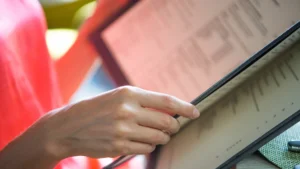
Custom menus contribute to how guests experience your brand, from the moment they sit down to the choices they make at the table. When design and materials are chosen with intention, your menu becomes part of the experience rather than just a list of items.
It’s best to approach menu design and production with the same level of care you give to your food, service, and overall brand.
What Makes a Menu “Custom”
A menu is considered custom when it is designed and produced specifically for your brand, not pulled from a generic template.
That means the size, layout, colors, fonts, and content are chosen to match how you want your business to look and feel. Your logo, brand colors, and tone are built into the design, so the menu reflects your identity instead of looking like a standard, off-the-shelf piece.
A custom menu also lets you choose the materials and finishes that fit how the menu will be used. You can select paper weight, coatings, folding styles, or binding options based on whether the menu will be handled daily, wiped clean, or used for a short-term event.
How Tailored Design and Materials Influence Brand Presentation
Your menu is one of the first things a guest touches and studies. If it looks and feels intentional, your brand feels more trustworthy, more professional, and more “worth it.”
Design affects what guests notice first
Your layout, spacing, and font choices guide the eye. When design is tailored to your brand:
- Guests can find items faster – Clear sections, headings, and spacing reduce confusion.
- Your best items stand out – You can use placement, size, and simple visual cues to highlight signature dishes, combos, or high-margin items.
- Your menu feels “on brand” – A modern café, a fine-dining restaurant, and a beach bar shouldn’t look the same. Your menu design helps guests understand your style instantly.
Even small details matter. For example, a clean layout with lots of white space can feel premium. A bold layout with strong icons can feel fun and casual. Neither is “better”. It just depends on the experience you want guests to expect.
Typography and color set the tone
Fonts and colors aren’t just decoration. They communicate your vibe.
- Fonts – they feel classic, modern, playful, or formal. If your menu uses a style that matches your space and signage, the brand feels consistent.
- Colors – they signal energy, warmth, simplicity, or luxury. Using your brand colors (or a close palette) ties the menu to your overall identity.
This doesn’t mean you need lots of colors. Often, fewer colors look more professional and are easier to read.
Material choices affect perceived quality
People judge quality partly through touch. When your menu uses the right materials, it reinforces your price point and your standards.
- Thicker paper – often feels more premium and durable.
- Smooth finishes – can feel clean and modern.
- Textured stocks – can feel crafted and upscale.
- Coated or laminated options – can support a polished look and can be easier to clean.
If your menu feels flimsy, smudges easily, or curls at the corners, it can make the experience feel less cared-for, even if your food is excellent.
Durability protects your brand image
Your menu is handled all day, every day. Spills, oils, moisture, and frequent wiping can wear it down quickly.
When you choose materials based on real use:
- Menus stay clean-looking longer
- Text stays readable
- Edges don’t fray as fast
- Pages don’t warp as easily
A worn menu can quietly damage your brand presentation. Guests may not comment on it, but they notice.
Finish choices change how your menu performs
Finishes affect both appearance and function.
- Matte finishes – reduce glare and often look more refined.
- Gloss finishes – make colors pop, but can show fingerprints more easily.
- Protective coatings – help resist moisture and light stains.
- Lamination – adds strong protection and is common for menus that need frequent cleaning.
The best choice depends on your environment: dim lighting, outdoor seating, busy bars, family dining, or fine dining all have different needs.
Consistency builds trust across locations
If you have multiple locations, a tailored design helps you present the same brand everywhere. When menus match in layout, fonts, and materials:
- Guests feel like they’re in the same brand experience
- Your team has an easier time updating and replacing items
- Your photos and marketing look more consistent
This matters for restaurant groups and hospitality brands because guests often compare experiences.
A tailored menu supports your pricing and positioning
Your menu isn’t just a list; it helps explain your value.
- If you’re premium, your menu should look premium.
- If you’re fast-casual, your menu should feel clear, quick, and modern.
- If you’re event-focused, your menu should feel polished and “occasion-ready.”
When design and materials match your concept, guests are more likely to accept your pricing because the experience feels aligned.
Custom Menus for Restaurants, Hotels, and Hospitality Groups
If you’re running a restaurant, hotel, or group, custom menus help you cover every service point with the right format, including dine-in, bar, room service, and events, while keeping everything organized for staff and easy for guests to use.
Restaurants
In a restaurant, “custom menus” usually means you’re building menus that match your exact service style and day-to-day needs, such as:
- Main dine-in menus (lunch/dinner) with your full core items
- Bar and beverage menus (cocktails, wine lists, beer lists)
- Dessert menus or after-dinner drink menus
- Seasonal/limited-time menus (specials, holiday menus)
- Takeout/delivery inserts (menu cards added to bags)
- Tasting menus (multi-course formats)
If you operate more than one concept under one roof (for example, a restaurant + bar + café counter), you often create separate menus for each service area so guests don’t have to sift through irrelevant items.
Hotels
Hotels use custom menus across multiple guest touchpoints, often more than a standalone restaurant does. Common examples include:
- In-room dining (room service) menus, designed for guests ordering from a room and needing clear instructions (hours, delivery fees, how to order)
- Lobby bar menus that are separate from the main dining room
- Pool/spa/lounge menus that fit a more casual “grab and go” setting
- Breakfast menus that may differ by weekday vs. weekend
Hotels also produce group and banquet menus for meetings and events. For example, Marriott properties publish detailed banquet/catering menus that cover breaks, lunch, receptions, and pricing structures. These are designed for planners and group orders rather than individual diners.
Hospitality groups and multi-location brands
If you manage multiple locations (restaurant groups, hotel groups, franchises), custom menus often focus on consistency and control across sites.
That usually looks like:
- A standard template that every location must follow
- A controlled way to allow local items without breaking the brand format
- A defined approval process so updates stay consistent
You can see this approach clearly in franchise-style guidance, where new locations are required to follow a set menu template for continuity across restaurants, while still allowing limited local variation under the same format.
Events, banquets, and conferences
For events, custom menus are built for a specific moment and audience, like:
- Wedding reception menus
- Corporate banquet menus
- Conference break menus (coffee breaks, snack stations, boxed lunches)
- Plated vs. buffet menus (different structure and wording)
Many hotels explicitly offer planners the ability to choose set menus or build selections from individual dishes. This is a typical “custom menu” workflow for event dining.
Supporting Brand Consistency Across Multiple Locations
Guests expect the same experience every time they visit your brand. If the menu looks different from one location to another, it can create doubt even if the food is the same.
Standard design keeps everything aligned
A consistent menu design means each location uses the same:
- Layout and structure
- Fonts and text styles
- Section order and naming
- Brand colors and logo placement
This makes it easier for guests to read the menu quickly, especially if they already know your brand from another location.
Controlled flexibility for local needs
Consistency does not mean every menu must be identical. Many brands allow small, controlled changes, such as:
- A short section for local or seasonal items
- Regional pricing adjustments
- Location-specific drinks or specials
By keeping these changes within a set design system, you avoid menus that feel off-brand or improvised.
Easier updates and rollouts
When all locations follow the same menu format, updates are faster and cleaner.
You can:
- Change prices without redesigning the entire menu
- Swap seasonal items using the same layout
- Roll out new dishes across all locations at once
This reduces errors and keeps outdated menus from staying in circulation.
Stronger training and operations
Consistent menus help your staff, too.
- New hires learn the menu faster
- Staff moving between locations feel at home right away
- Front-of-house teams can answer questions more confidently
When everyone is working from the same structure, daily operations run more smoothly.
Reliable quality across locations
Using the same menu materials and printing standards helps each location present the same level of quality.
If one location uses thick, durable menus and another uses thin, worn ones, guests will notice. Consistent production ensures:
- Menus wear at the same rate
- Colors and text stay uniform
- Replacements match existing menus
Consistency supports growth
As you add new locations, a consistent menu system makes scaling easier.
You already know:
- What the menu should look like
- How it should be produced
- How updates should be handled
Given this, design rules and templates only work if every menu is produced the same way, every time. This is where a reliable printing partner becomes important.
Why Professional Printing Is Essential for Custom Menus
The Printery works as a reliable, premium printing partner for businesses that need high-quality print materials. You’re not just sending files to a machine. You’re working with a team that understands design intent, material performance, and production standards.
Beyond menus, we also support print marketing materials for campaigns, events, brand activations, and organizational initiatives, making it easier to keep all your printed pieces consistent across locations and reorders.